
METAL ROOFING
What Type of Metal Roof Is Best for Arizona Heat?
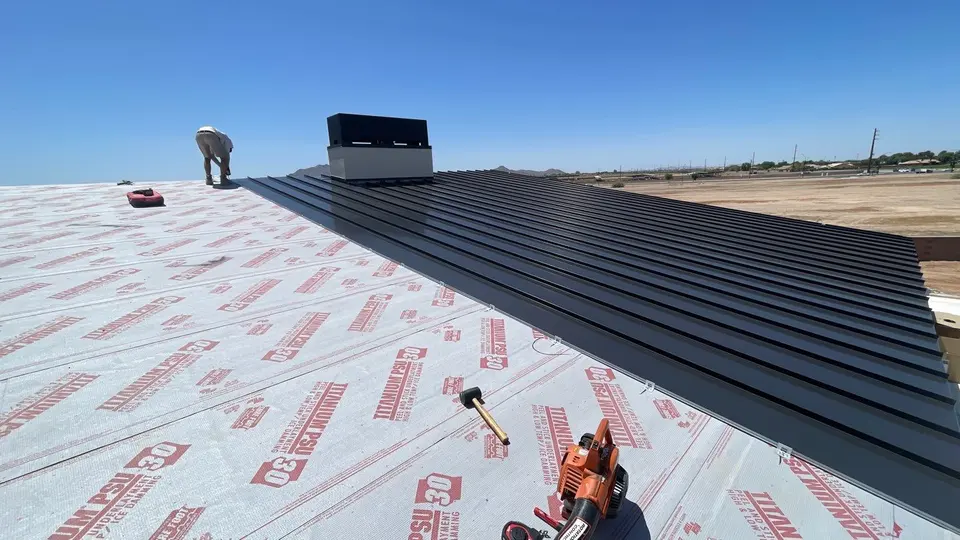
The short answer: for most Phoenix homes, the best metal roof is a concealed-fastener standing seam panel made from painted Galvalume steel, finished in a PVDF (Kynar 500 or Hylar 5000) coating with a published cool-roof rating, and installed over a high-temperature underlayment on clips that let it move. Aluminum, copper, and zinc are all fine metals, but the problems they solve are mostly coastal and wet-climate problems, and the Valley does not have them.
What type of metal roof is best for Arizona heat?
It sounds like one question, but it is really four: what the panel is made of, what it is coated with, what shape it is, and what goes underneath it. Each has a different answer in Phoenix than in Florida or Oregon.
Most metal roofing advice online is written for places where water is the enemy. Here the enemy is sun and movement. Our roofs sit through close to 300 sunny days a year, dark panels run well past 150 degrees on summer afternoons, and the same panel can be in the 30s at dawn in January. So the best metal roof for Arizona is the one built to handle UV and daily expansion first, and corrosion a distant second.
Steel or Aluminum: The Base Metal
Galvalume steel is what most residential metal roofing is made of, and it is what we recommend for Valley homes. It is steel sheet coated with an aluminum-zinc alloy (you will see it spec’d as AZ50 or AZ55, which refers to the weight of that coating), then primed and painted. It is strong, it holds a seam well, it resists denting better than aluminum at a comparable thickness, and in our dry, salt-free air the metallic coating has very little working against it.
Galvanized steel (zinc coated, usually labeled G90) shows up in some agricultural panels. It works, but for a painted residential roof Galvalume is the better substrate.
Aluminum is the metal that gets recommended when someone lives near the ocean, because it does not rust and shrugs off salt spray. That is a real advantage in Galveston. In Glendale it buys you very little. Meanwhile aluminum has two traits that work against it here:
- It expands with heat roughly twice as much as steel. A 30 foot steel panel going through a 100 degree swing moves about a quarter inch. The same panel in aluminum moves close to half an inch. In a place where that swing happens every day for most of the year, that is twice the movement for the clips, seams, and flashings to absorb.
- It is softer. The Valley does not get hail often, but it gets it, and monsoon wind throws palm fronds, gravel, and patio furniture around. Aluminum dents more easily at the thicknesses used for roofing.
Aluminum still has a place. It is common for fascia and trim, where the pieces are short and the movement is small, and we form both on our own brakes. For the main roof field, painted steel is the stronger choice in this climate.
Copper and zinc are premium architectural metals and rare on Valley roofs. Their patina forms through repeated wetting, so in air this dry it comes slowly and unevenly. If you want copper accents, keep in mind that water running off copper onto Galvalume or zinc will corrode them.
The Coating Matters More Than the Metal
If there is one line on a metal roof proposal to read twice in Phoenix, it is the paint system, because the coating is what our sun goes to work on every day.
PVDF finishes (sold as Kynar 500 or Hylar 5000, typically as a “70 percent PVDF” resin) are the premium tier. They hold color and resist chalking under sustained UV far better than the alternatives, and they are what we want on a roof that is visible from the street or from a hillside.
SMP finishes (silicone-modified polyester) cost less and do well in much of the country. Under Arizona sun they chalk and fade sooner, and saturated reds, blues, and greens tend to go first. A faded SMP roof is not a leaking roof, but it looks older than it is well before the metal is done. We cover the longer-term version of this in our post on how long a metal roof lasts in Arizona.
Cool Roof Ratings, and the Number to Actually Look At
Most major panel manufacturers list their colors with the Cool Roof Rating Council, which publishes two numbers for each: solar reflectance (how much sunlight bounces off) and thermal emittance (how well the surface sheds the heat it did absorb). Both are published as an initial value and a three-year aged value.
In Phoenix, look at the aged numbers. Our roofs collect dust between rains, and a dust storm can coat a roof in an afternoon. The initial number is what the panel does fresh off the line. The aged number is closer to what it does on your house in year three.
Two things surprise people here:
- Bare, unpainted metal is not the coolest option. Shiny Galvalume reflects a lot of light, but its emittance is low, which means the heat it does absorb stays in the panel instead of radiating away. A painted panel with a good rating usually performs better on the metric that matters.
- Dark does not automatically mean hot. Many manufacturers now make darker colors with infrared-reflective pigments, which bounce back a meaningful share of the invisible part of sunlight while still looking charcoal or bronze. A dark cool-pigment panel will still run warmer than a light one, but the gap is smaller than it used to be. That matters, because dark standing seam is what a lot of desert-modern homes call for.
And remember that a metal roof holds far less heat than tile, whatever color it is. That is the bigger story on comfort, and we explain it in does a metal roof make your Phoenix home hotter.
Standing Seam vs. Exposed Fastener: The Profile
The panel shape decides how the roof handles all that movement. On an exposed-fastener panel (corrugated or R-panel), screws go straight through the face of the metal every few feet, which pins the panel in place. It cannot slide as it grows and shrinks, so over years of Arizona heat cycles the screw holes oval out and the rubber washers under the screw heads bake and harden.
Standing seam attaches with clips hidden under the raised seams, and nothing penetrates the panel face. That is why it is the system we build our metal work around, and why we do not recommend exposed-fastener panels on homes in this market. The detailed comparison, including where corrugated does make sense, is in our post on standing seam versus corrugated metal roofing.
Within standing seam, two details matter a lot in heat:
Clip type. Fixed clips hold the panel in one place. Floating (often two-piece) clips let it slide along its length. On longer runs, floating clips are what let a panel go through a daily 100-plus degree swing without stressing the seam or buckling between clips.
Panel length and fabrication. Every end lap is a joint that has to deal with movement. We form panels on a trailer-mounted roll former at the job site, cut to the measured eave-to-ridge length, so most homes get continuous panels with no horizontal laps at all. Our custom fabrication setup also means the flashing and trim come off our own brakes to match.
Gauge: Thicker Holds Up Better
Steel roofing thickness is measured in gauge, and the numbers run backward: 24 gauge is thicker than 26 gauge. Both are common for residential standing seam. Heavier gauge resists denting, shows less oil-canning (the visible waviness on wide flat panel faces, which bright Arizona light makes easier to see), and holds its shape at the seam over decades of movement. It is an unglamorous line on a proposal and one of the more durable ones.
What Goes Under the Panels
A metal panel in July sun passes a lot of heat straight into whatever is under it. Ordinary asphalt felt can soften under those temperatures, and self-adhered underlayments not rated for the heat can get sticky or break down. Manufacturers publish a maximum service temperature for each product, and under metal in the Valley you want one rated for high heat. The photo at the top of this post shows exactly that: a high-temperature peel-and-stick underlayment going down over the whole deck ahead of the panels.
Two related details are worth asking about:
- Separation from masonry. Galvalume should not sit in direct contact with wet mortar, fresh concrete, or stucco, which are alkaline and can attack the coating. On Valley homes with stucco parapets and walls, that is a flashing detail the installer needs to get right.
- Evaporative cooler bleed-off. If your house still runs a swamp cooler on the roof, its mineral-heavy discharge water should never drain across metal panels. We cover why in the metal roof lifespan post.
So What Should You Put on Your House?
For a typical pitched roof in the Valley, our recommendation is steady: Galvalume steel standing seam, 24 or 26 gauge depending on panel width and design, a PVDF finish in a color with a good aged cool-roof rating, floating clips on longer runs, and a high-temperature underlayment underneath. That combination is built for what actually wears on metal here: sun and movement.
The exceptions are specific. An architectural design that calls for copper, a low-slope section that belongs under foam instead, or an HOA that only permits certain looks can change the answer. Many Valley HOAs control roof material and color, so check your CC&Rs before you fall for a sample. You can see the full range of what we build on our metal roofing page.
Frequently Asked Questions
Is aluminum or steel better for a metal roof in Arizona?
For the main roof on most Phoenix homes, painted Galvalume steel. Aluminum’s big advantage is resisting salt air, which the Valley does not need, and it expands about twice as much as steel and dents more easily.
What color metal roof is best for Phoenix heat?
Lighter colors reflect the most sunlight, but many darker colors now use infrared-reflective pigments that narrow the gap. Pick a color you like, then check its three-year aged rating with the Cool Roof Rating Council.
Is Kynar paint worth it on a metal roof in Arizona?
On a roof people will see, yes. PVDF finishes like Kynar 500 hold color and resist chalking under sustained UV noticeably better than SMP finishes, and our sun is about as hard a test as the continental U.S. offers.
Do metal roofs need special underlayment in Arizona?
They need underlayment rated for high temperatures. Metal passes heat straight through to what is beneath it, and standard felt or a low-rated self-adhered membrane can soften or break down. Ask your contractor which product they use and what its temperature rating is.
Is stone-coated steel a good choice in Phoenix?
Stone-coated steel is steel with a granular finish made to look like tile or shake, and some homeowners choose it to match an HOA look. It is a different product with its own installation method and tradeoffs. Our metal work centers on standing seam, and we are glad to talk through how the two compare for your house.
Talk It Through With Samples in Hand
Color, gauge, and finish are much easier to decide with the actual panels in your own light. We bring real samples to every estimate and walk through the options on your roof, not a catalog. Call Pinnacle Roofing at (623) 792-5497 to set up a free estimate.