
TILE ROOFING
Tile Roof Restoration in Phoenix: How Lift and Relay Works
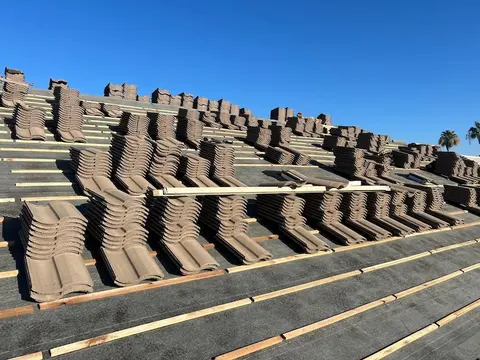
The short answer: a tile roof restoration, also called a lift and relay or remove and reset, takes your existing tile off, replaces the worn-out underlayment and flashing underneath, and sets the same tile back down. On a typical Valley house it runs three to five working days, done in sections so the roof is never left open overnight, and the only real surprises come from what the crew finds on the deck once the old membrane is off.
If you are still deciding whether restoration is right for your roof, see our repair, restore, or replace decision guide. This post covers what the job actually looks like, from the first tile coming off to the last ridge cap going back on.
What Happens During a Tile Roof Remove and Reset?
In order: inspection, staging the tile, tearing off the old underlayment, repairing the deck, installing new underlayment and flashing, resetting the tile, and a final walk. Most of it is invisible from the driveway, so it helps to know what good work looks like before a crew shows up.
Before Day One: What the Inspection Should Settle
A good restoration is planned from on top of the roof, not from a satellite image. Before we write the scope, we lift tile at valleys, low edges, penetrations, and walls where the roof meets stucco. Three things from that visit shape the whole job.
Your pitch. A lot of Valley tract housing carries tile at 3:12 or 4:12. Below 4:12, code calls for two layers of underlayment, so the pitch decides the membrane spec before anyone talks about brands. We walked through that split in our post on the best underlayment for tile roofs in Arizona.
Your tile. Concrete and clay behave differently coming off a roof. So does a 1990s concrete profile that the manufacturer stopped making twenty years ago. Knowing that up front tells us where replacement pieces will come from.
What sits on the roof. Rooftop evaporative coolers, AC stands, satellite mounts, and solar arrays all have to come off or be worked around, and each penetration gets new flashing. Solar in particular needs its own detach and reset plan, usually with the solar company involved, and that should be on the schedule before the start date is set.
Staging the Tile
Once work starts, the tile comes off one section at a time and gets stacked, usually right on the roof on a slope that is not being worked that day. Stacking on the roof instead of hauling everything to the ground saves a huge number of trips up and down a ladder, and every trip is a chance to break a tile.
Staging is also a structural decision. Concrete tile weighs roughly 9 to 12 pounds per square foot of roof, so a crew spreads the stacks out in short runs across the framing instead of building one tall pile in the middle of a slope. The photo at the top of this post shows what that looks like.
Handling matters more than people expect. Tile is nested by profile so pieces are not bearing on each other’s weak points. Most breakage on a restoration does not happen when the tile comes off. It happens when someone steps wrong on a stack or sets a bundle down hard.
Tear-Off: What Comes Off the Roof
With a section of tile staged, the crew strips everything underneath it: the old felt or synthetic, the nails, the old battens if they are being replaced, and any sheet-metal flashing that is not being kept. On an original roof from the late 1990s or early 2000s, the felt often comes up in brittle pieces rather than sheets, and the deck is covered in decades of dust that blew in through the tile laps. All of it goes straight into a dumpster or trailer in the driveway.
The Deck: Where the Surprises Live
This is the part of the job nobody can fully quote in advance, and honest contractors say so in writing. Once the old membrane is off, the plywood or OSB sheathing is visible for the first time since the house was built. Most Valley decks are in good shape, because the dry climate is kind to wood that stays dry. The problems cluster where water has been getting through for a while: the low end of valleys, below leaky pipe boots, along wall flashings, and at the eaves where water runs off. Soft or delaminated sheathing in those areas gets cut out and replaced.
Two other things show up often here. Old patches, where someone troweled roof cement over a leak years ago, have to be scraped and repaired properly rather than buried under new membrane. And at the eaves, pigeons are a real problem in the Valley. When the eave closure (the strip that blocks the open ends of the tile at the bottom edge, often called bird stop) is missing or broken, birds nest under the first few courses, and what they leave behind damages the membrane and the wood beneath it.
Our rule is simple: if we find damaged decking or rotted battens, we photograph it, show you, and price the fix before we touch it. You should never find out about deck repair from the final invoice.
New Underlayment, Flashing, and Battens
With the deck sound, the new waterproofing goes down. These details separate a restoration that lasts from one that leaks again in a few monsoons.
The membrane. The product should be named in your proposal, and in this climate it should be rated for sustained high temperatures. On a July afternoon a tile roof surface can run 150 to 180 degrees, and the underlayment sits in that heat four months a year. At 3:12 it is two layers or a full self-adhered system. At 4:12 and steeper, one layer meets code, but a second layer or self-adhered coverage buys real years here.
The flashing. Valleys get new metal. Every pipe, vent, and cooler stand gets a new flashing. The places where a roof slope meets a stucco wall or parapet, which is a huge share of Valley homes, get new wall flashing tucked properly under the stucco or covered by a counterflashing. That wall-to-roof joint is one of the most common leak sources we see on older tile roofs, and it is the one detail a restoration crew is most tempted to reuse.
The battens. If the roof uses battens, they should let water drain. A batten nailed flat and continuous across the slope works like a small dam. Notched or raised battens, or counter-battens run vertically underneath, give water a path off the roof.
The eaves. New eave closure goes in so birds cannot move back in under the first course.
All of this gets done section by section. Each area of the roof is stripped, repaired, and covered with new membrane before the crew moves on, so there is never an open deck sitting under a monsoon sky overnight.
Setting the Tile Back Down
Now the original tile goes back on, fastened to current code in straight, even courses. It often looks cleaner than before, because twenty years of slipped pieces get corrected.
Breakage. Some tile always breaks, and any contractor who says otherwise has not done many of these. Clay is more fragile than concrete, and old concrete tile that has baked for decades can be more brittle than it looks. Replacement pieces come from salvage, from the homeowner’s leftovers if there is a stack behind the garage, or from matched new stock. Your proposal should say how broken tile is counted and where replacements come from.
Discontinued profiles. Plenty of original Valley roofs used profiles that are no longer made. Then salvage tile is the answer, and that should be sorted out before tear-off, not halfway through.
Color matching. Even a correct replacement tile will not match a roof that has faded in the Arizona sun for twenty-plus years. A careful crew pulls weathered tile from a back slope for the street-facing side and puts the new pieces where nobody looks.
Ridges and hips. Mortar-set ridge and hip caps are common on older Valley roofs, and that mortar cracks as the roof expands and contracts through its daily temperature swing. When the caps go back on, ask whether they will be mortar-set again or mechanically fastened, and how the joint will be sealed.
A Day-by-Day Look at a Typical Job
For a single-story Valley house with no major deck issues, the schedule usually looks like this.
Day one: Setup, dumpster delivery, tarps over landscaping and around the house. Tile comes off the first section, which is stripped, inspected, and covered with new underlayment before the crew leaves.
Days two and three: The same cycle repeats around the roof. Flashing goes in as each section is covered. Any deck repair you approved gets done as those sections open up. Tile starts going back on the finished sections.
Days four and five: Remaining tile goes back on, ridges and hips get set, penetrations and cooler stands get finished, and the crew cleans up. We walk the roof and then walk the property with you before calling it done.
Two-story homes, complicated roofs, solar, and bigger deck repairs stretch the timeline. In summer, crews in the Valley start at first light and finish before the worst of the afternoon heat, and monsoon afternoons can end a workday early. That is part of why fall through spring is the easiest season to schedule a restoration here.
What Your House and Yard Look Like During the Job
It is noisy, with tile clattering and foot traffic overhead from early morning on. Dust from the old underlayment falls onto whatever is near the roof edge, so plants, patio furniture, and cars should be protected or moved, and if your pool sits close to the house, ask how the crew will keep debris out of it. Inside, some attic dust can come down through older ceiling fixtures and attic hatches.
At the end, the crew should run a magnet across the yard and driveway for nails, haul off every piece of old material, and leave the property the way they found it.
Frequently Asked Questions
How long does a tile roof restoration take in Phoenix?
Three to five working days for most single-family homes, done in sections so the roof is protected every night. Larger roofs, two-story homes, solar systems, and significant deck repair add time.
Will my HOA need to approve a tile roof restoration?
Since the same tile goes back on, the look of the house does not change, which usually keeps it simple. Some Valley HOAs still want notice or a form for any roofing work, so check with yours before the start date.
What happens if it rains during a remove and reset?
The crew only opens as much roof as it can cover with new underlayment in a day, and anything still open at the end of the day gets protected. Watching the forecast during monsoon season is part of the job.
How many of my tiles will break during a restoration?
Some, and how many depends on the tile type, its age, and how carefully it is handled. Clay and very old concrete break more easily. Your contract should say how broken tile is counted and replaced before work starts.
See What Your Roof Would Need
If your underlayment is at the end of its life and you want to know what a restoration would involve on your specific house, we will get on the roof, lift tile in the right spots, and show you photos of what is underneath before recommending anything. You can read more about our tile roof remove and reset and underlayment replacement work, or call Pinnacle Roofing at (623) 792-5497 for a free inspection.