
TIPS
Will Homeowners Insurance Cover My Phoenix Roof?
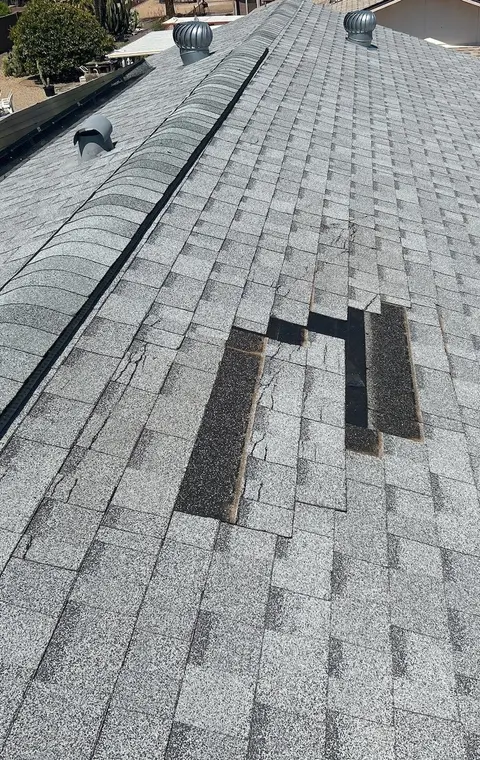
The short answer: homeowners insurance covers a Phoenix roof when something sudden and accidental damages it, which here mostly means monsoon wind, hail, lightning, fire, and things that fall on the house. It does not cover a roof that is simply worn out from twenty-plus summers of sun, and the hard part on most Valley claims is that both things are true of the same roof at once. Whether your policy pays, and how much, comes down to which of those two stories the damage tells and what your policy says about roof age and depreciation.
We are roofers, not adjusters, and nobody honest will tell you what your carrier will decide before your carrier decides it. What we can do is explain how the coverage question usually gets answered and where Phoenix roofs break the national rules of thumb. October is when a lot of homeowners are asking, because monsoon season officially ended on the last day of September and the leaks it caused are showing up on ceilings now.
Will my homeowners insurance cover my roof?
The whole question runs on one distinction: sudden versus gradual. A standard homeowners policy covers the structure against sudden, accidental events, and it specifically excludes wear and tear, deterioration, neglect, and damage that happens slowly. A microburst that peels a slope of tile off on a Tuesday night is sudden. Felt underlayment that dried out and cracked over two decades of 170-degree afternoons is gradual. The first one is a claim. The second is a roof that was always going to need replacing, and the policy was never meant to pay for it.
The adjuster’s job is to sort every piece of damage on your roof into one of those two buckets, and your roof’s age sets the odds before anyone climbs a ladder.
What a Phoenix policy usually covers
Wind. The big one in the Valley. Monsoon outflow winds and microbursts lift tile, tear shingle tabs, peel back metal panel edges, and strip ridge caps. The photo at the top of this post is a textbook case: two patches of shingles gone, underlayment exposed, a clean tear line.
Hail. Rare here compared to Texas or Colorado, but it happens. The October 2010 hailstorm that crossed the Valley put a generation of roofs through the claims process at once, and plenty of homeowners still have the roofs those claims paid for.
Falling objects, fire, and lightning. A neighbor’s palm fronds or eucalyptus limb through the tile, a strike that damages a section of roof, and the fire that can follow.
Interior damage that follows a covered event. If wind opens the roof and rain gets in that night, the stained ceiling, wet insulation, and warped flooring are usually part of the same claim.
What it usually does not cover
The exclusions are where most Valley claims get narrowed or denied, so read them in your own policy.
Wear and tear. Brittle underlayment, shingles that have lost their granules, foam coating chalked down to the foam, rusted-through flashing. These are age, not events.
Sun and heat. There is no “UV damage” peril. A tile that cracked from thermal cycling or a coating that went years past its recoat window is maintenance.
Birds, rodents, and insects. Pigeons nesting under the first few courses of tile along the eaves are a Phoenix classic, and what they leave behind rots underlayment and wood. Nearly every policy excludes animal damage.
Lack of maintenance. A foam roof that ponded because the scuppers were packed with debris is a maintenance problem in the carrier’s eyes, even if the leak showed up during a storm.
Cosmetic damage. Some policies now carry a cosmetic damage exclusion for roof surfaces, which matters most on metal. Hail that dents a standing seam panel without affecting how it sheds water may be excluded entirely. If you have a metal roof, find this endorsement before a storm, not after.
The tile roof problem: wind moves the tile, age kills the underlayment
Here is where Phoenix diverges from any national article. Most of the Valley’s housing stock wears concrete or clay tile, and on a tile roof the tile is not the waterproofing. The underlayment beneath it is. Tile lasts fifty years or more. The felt under an original 1990s or early-2000s roof does not, and a huge share of Valley roofs are sitting in exactly that window right now. We laid out the age math in our post on how long tile roof underlayment lasts in Arizona.
So a monsoon cell slides forty tiles out of place on the back slope, and the next morning there is water on the hallway ceiling. The homeowner sees storm damage. An adjuster who knows Valley roofs sees two separate things: displaced tile, which the wind did and the policy covers, and a leak that came through underlayment that was already cracked before the wind blew. The carrier will generally pay to reset the tile and may pay for the interior damage. It will usually not pay to replace underlayment that was failing on its own schedule.
That split is the most common argument on Valley tile claims, and it is why “the storm caused my leak” is often half true. Clear photos of the displaced tile the morning after, taken from the ground, tie the tile movement to the event. And an honest roofer’s report that separates what the wind did from what age did is worth more than one that calls everything storm damage, because an adjuster who finds old wear padded into a scope stops trusting the rest of it.
How the answer changes by roof type
Foam. Phoenix has more sprayed foam roofs than almost anywhere, and adjusters who come in from out of state after a big storm often have never seen one. Hail leaves pockmarks in foam that can be repaired and recoated, and that is a legitimate claim. Coating that has chalked or blistered from sun is maintenance, and so is ponding from blocked drains.
Shingle. Wind-torn tabs and hail bruising are familiar to every adjuster. The fight is usually about age: a shingle roof already past its life here, with granule loss on every slope, hands the carrier an easy wear argument. Our storm damage shingle roof repair page covers the repair itself.
Metal. Metal takes monsoon wind better than anything else on this list, but when it does get hit the cosmetic exclusion is the thing to check. Dents that do not open a seam may not be covered, while a panel edge lifted by wind is functional damage and a clear claim.
How much the policy actually pays
Even a covered claim does not always pay for a whole roof. The terms that decide this are on your declarations page.
Replacement cost versus actual cash value. A replacement cost policy pays what it costs to fix the roof, usually in two steps: a first payment that holds back depreciation, and the rest once the work is done and invoiced. An actual cash value policy pays the depreciated value only, which on a twenty-year-old roof can be a fraction of the repair. Many carriers have moved roofs specifically onto actual cash value, or onto a roof payment schedule tied to age and material, even when the rest of the house stays on replacement cost. If your policy renewed in the last few years, check for this.
Your deductible. Some Arizona policies now carry a separate wind and hail deductible figured as a percentage of the dwelling coverage rather than a flat amount. On a smaller repair the deductible can be most of the claim, which is one reason to get a repair estimate before filing.
Claims history. Filed claims, including denied ones, go into the industry’s shared claims database and can affect your renewal and premium. That is the practical reason to know what you have before you file, which is also the advice on our insurance claim assistance page.
Dating the storm
Because the claim turns on a sudden event, pinning the damage to a specific storm matters, and in a busy year the Valley gets hit by a string of cells a few days apart. The National Weather Service office in Phoenix publishes storm reports, and the Maricopa County Flood Control District runs a public network of rain and wind gauges that will tell you what blew through your neighborhood on a given night. Write the date and the nearest gauge reading down. The step-by-step on photos and records is in our post on documenting roof storm damage for insurance.
Roof age and keeping your policy at all
The coverage question has a second half that shows up at renewal rather than after a storm. Carriers have gotten stricter about roof age. A roof past a certain age, often somewhere around fifteen to twenty years depending on the company, may trigger a request for an inspection, a move to actual cash value, or a non-renewal until the roof is replaced. On a Valley tile roof that conversation usually lands on the underlayment, because the tile looks fine from the street and the carrier’s inspector may or may not lift any of it. If your carrier asks for one, get a roof inspection from a licensed roofer who will actually get on the roof and lift tile in the right spots, and ask for the report in writing.
Where a roofer fits, and where one should not
A roofer’s proper role in a claim is narrow and useful: inspect the roof, document it with dated photos from on the roof, write a report that separates storm damage from wear in plain language, and meet the adjuster on the roof so nothing gets missed. A roofer should not be filing your claim, negotiating with your carrier, or promising what the policy will pay.
Be especially careful in the weeks after a big storm. Door knockers who offer to waive your deductible, or who call every roof on the street a total loss, are the reason adjusters walk onto Valley roofs skeptical. Waiving a deductible is insurance fraud in practice. Verify any contractor’s license with the Arizona Registrar of Contractors first; our page on how to choose a roofing contractor in Phoenix walks through what to check. If a claim turns into a real dispute over the amount, most policies have an appraisal clause, and the Arizona Department of Insurance and Financial Institutions licenses public adjusters and takes consumer complaints.
Frequently Asked Questions
Does homeowners insurance cover a roof leak in Arizona?
It covers a leak caused by a sudden covered event, like wind opening the roof during a monsoon storm, and generally covers the interior damage that follows. It does not cover a leak from underlayment or flashing that wore out over time, even if the leak first showed up during a storm.
Will insurance pay to replace my tile roof underlayment?
Usually not on its own. Underlayment that has aged out is wear and tear. If a storm displaced tile and the carrier agrees the storm damaged the underlayment beneath it, that section may be covered, but a whole-roof underlayment replacement on an old roof is normally the homeowner’s cost.
How long do I have to file a roof claim in Arizona?
Your policy sets the deadline, so read it or ask your agent. The practical answer is to move quickly, because water keeps working on the deck and framing after the storm, and the longer damage sits the easier it is to call it wear.
Get an honest read before you decide
If a storm left you wondering whether your roof is a claim or a repair bill, we will get on the roof, lift tile where it matters, and give you a written report that separates what the weather did from what time did. Call Pinnacle Roofing at (623) 792-5497 for a free inspection.