
TIPS
Do I Need a New Roof?
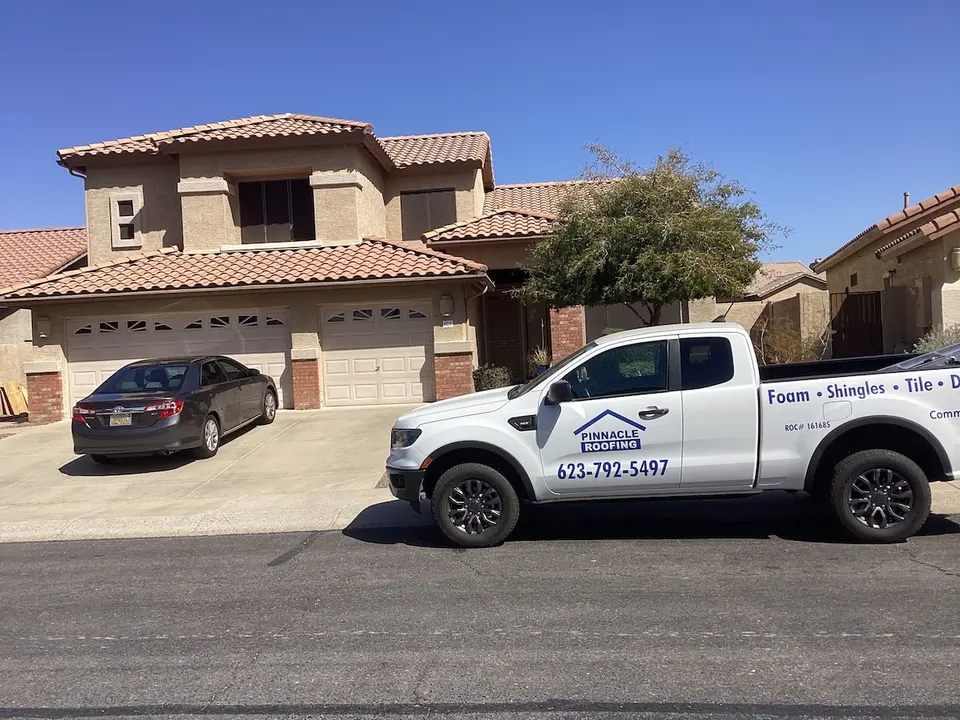
The short answer: probably not yet, and the way to find out is to identify which system you have and check the part of it that fails first. On a tile roof that is the underlayment, not the tile. On foam it is the coating. On shingles it is the field of the roof itself. Age alone does not answer the question, and neither does a single leak.
Start by Knowing What You Have
Most bad roofing decisions in the Valley come from applying the wrong mental model to the roof you own. The four systems here fail in completely different ways and on completely different schedules.
Tile. The tile is not the waterproofing. The underlayment beneath it is, and it wears out decades before the tile does. A tile roof can look flawless from the street and be finished underneath. This is the single most misunderstood thing about roofs in Phoenix, and it means a 25-year-old tile roof usually needs new underlayment, not new tile.
Foam. The foam can last essentially indefinitely if the coating on it is renewed on schedule, generally every 5 to 10 years in our sun. A foam roof that has been maintained rarely needs replacing. One that has gone twenty years without a recoat may.
Shingle. The shingles themselves are the clock, and here they run 15 to 25 years. When the field goes brittle, the roof is done. There is no hidden layer to replace instead.
Metal. Longest-lived of the four. What ages is fasteners, sealant, and coating rather than the panel, so most aging metal roofs need attention rather than replacement.
Knowing which of those you own tells you what to check, and it usually tells you that the expensive answer is not the necessary one.
The Signs That Actually Mean Something
Water inside. A stain on a ceiling means water has been getting in for a while, since it has to saturate insulation and drywall before it shows. It does not mean the whole roof is done. One leak is a leak until an inspection says otherwise.
Granules in the gutters, on a shingle roof. The surface is wearing through. Combined with curling edges, that is a roof in its last years.
Chalky, dull, or thin coating on a flat roof. The coating is spent and the substrate is starting to take UV directly. This is the recoat signal, and catching it here is the difference between maintenance and replacement.
Broken or slipped tiles. Worth fixing promptly, because each gap exposes underlayment to direct sun and that spot ages far faster than the rest.
Sagging anywhere. A visible dip in a roof plane means the deck has been wet long enough to lose strength. That is structural and it does not wait.
Daylight through the deck from the attic. Self-explanatory.
What is not a reliable sign: the age of the house, a neighbor getting a new roof, or a door-knocker telling you yours looks bad after a storm.
What an Inspection Should Actually Do
The useful part is not somebody looking at your roof. It is somebody looking under it.
On a tile roof, that means lifting tile in several places to see the condition of the underlayment. Anyone who tells you a tile roof looks fine without lifting tile has told you nothing, because the tiles looking fine is the entire problem. On a foam or coated roof, it means checking for trapped moisture rather than judging by appearance, since a roof can look uniform and be wet in one corner. On any roof it means looking in the attic, checking the flashings and penetrations where leaks actually start, and coming back with photos and something in writing.
That is what a roof inspection should include, and it is worth asking what a given company’s version covers before you book it.
Repair, Maintain, or Replace
Once you know the condition, the decision usually sorts itself into one of three.
Repair when the problem is in one place and the rest of the system is sound. Isolated storm damage, a failed flashing, a few broken tiles, a bad seam. Age is not a reason to skip a repair that will hold for years.
Maintain when the system is intact but the sacrificial layer is worn. This is a foam recoat, or replacing tile underlayment while reusing the tile. It is the cheapest useful thing in roofing and it is the answer far more often than people expect. On tile that job is a remove and reset, and our guide on repair, restore, or replace for tile roofs works through that decision in depth.
Replace when the failure is general rather than local: shingles brittle across the whole roof, tile too broken to reuse, deck damage over a wide area, or a system that has been leaking long enough that the structure underneath needs work.
The honest test is whether the problem is in one place or everywhere. That is what separates a repair from a replacement, and it is a question somebody can answer for you in an afternoon.
What a Replacement Involves
If it does come to that, the shape of the job is worth knowing in advance. The old system comes off, the deck gets inspected and repaired where it is damaged, new underlayment goes down, flashings and edge metal get replaced rather than reused, and the new roofing goes on. Most residential roofs are a matter of days rather than weeks, tile and metal generally taking longer than shingle.
Two things to insist on. Deck repair should be priced up front, with a stated rate for what turns up once the roof is open, because nobody can see it beforehand and a bid that ignores it is setting up a change order. And flashings should be replaced. Reusing old flashing on a new roof is a shortcut that shows up as a leak later.
You should get two kinds of warranty: a manufacturer warranty on the materials, and workmanship coverage from the company that installed it. They are different documents covering different failures. We back our own work with comprehensive warranties and would rather explain the distinction before the job than after.
Frequently Asked Questions
How long does a roof last in Phoenix?
It depends entirely on the system. Shingles 15 to 25 years, tile underlayment roughly 15 to 25 while the tile itself goes much longer, foam indefinitely with recoats every 5 to 10 years, metal 25 to 60 depending on the panel type. Our sun shortens most of these compared to national figures.
Do I need a new roof if it is leaking?
Not necessarily, and usually not. Most leaks start at a penetration, a flashing, or a valley rather than in the field of the roof. Find the source before pricing a replacement.
My roof is 20 years old and looks fine. Should I worry?
Worth an inspection, not worth worrying. On tile especially, twenty years is exactly when the hidden layer starts mattering and exactly when the visible layer still looks new.
A roofer knocked after a storm and said I need a new roof. Now what?
Get a second opinion from a company you contacted, not one that contacted you, and verify any license number through the AZ ROC. Our guide on choosing a roofing contractor covers what to check.
Is it cheaper to repair or replace?
Repair, almost always, when repair is genuinely an option. The real question is whether a repair will hold, and that depends on whether the rest of the system has life left in it.
Get a Straight Answer
We will get on your roof, look under it rather than at it, and tell you honestly which of the three answers you are looking at. Sometimes that answer is that you have years left and should call us again in a while.
Call Pinnacle Roofing at (623) 792-5497 for a free inspection.