
MAINTENANCE
What Haboobs and Dust Storms Do to Phoenix Roofs
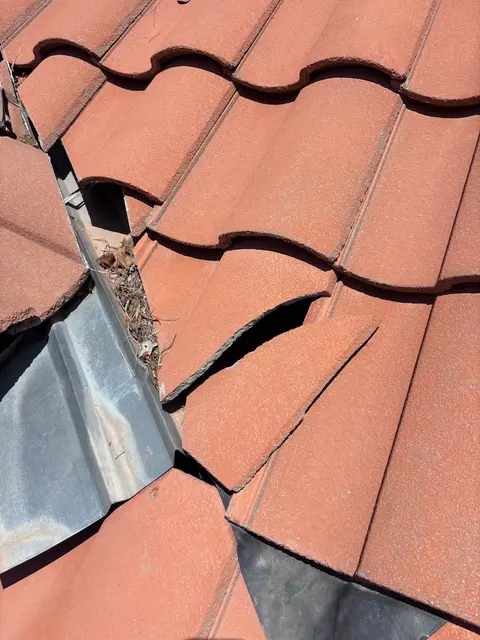
The short answer: a haboob sandblasts roof coatings, lifts and shifts tiles with its outflow winds, and packs drains and valleys with debris right before the rain arrives. Roofs rarely fail during the dust; they fail twenty minutes later when the water hits. Here is what to check after one rolls through.
If you have lived through a Phoenix summer, you have seen it: a brown wall of dust a mile high rolling across the Valley in the late afternoon, swallowing South Mountain and then the whole skyline. We call them haboobs, and they are one of the most dramatic things the Sonoran Desert does. Most people treat a dust storm as an inconvenience: close the windows, pull the car into the garage, wait for the sky to clear. What almost nobody thinks about is the roof, which just took the full force of it with nowhere to hide.
A haboob does real work on a roof, in ways a rain storm never could. The dust is abrasive, the wind ahead of it is violent, and the two together set your roof up to leak when the rain in the same storm arrives twenty minutes later. We get called out for a lot of these, and the damage usually traces back to something the homeowner never saw happen. Here is what is actually going on up there when the dust rolls through.
A Haboob Is Not Just Wind. It Is Wind Carrying Sandpaper.
A haboob forms on the leading edge of a collapsing thunderstorm. Cold air rushing down out of the storm hits the desert floor and shoves outward, picking up loose silt and sand off the open desert and the farmland around the Valley and pushing it ahead in a wall that can stand thousands of feet tall and stretch for a hundred miles. The outflow winds driving it regularly gust past 50 or 60 miles per hour, sometimes higher, and they arrive well before any rain.
That is what makes a dust storm different from an ordinary windy day. It is not clean air moving fast. It is air loaded with fine, gritty particles moving fast, and it hits your roof at a low, flat angle. For the ten or twenty minutes the front takes to pass, the exposed surfaces of your roof are being sandblasted. Phoenix silt is fine and hard, closer to a caliche grit than beach sand, and it scours anything it moves across. One storm does not strip a roof bare. But we do not get one storm. We get a season of them, year after year, and the wear accumulates.
What the Grit Does to Each Kind of Roof
Every roof system in the Valley handles the abrasion differently, and each has a specific weak point a haboob finds.
On foam and coated flat roofs, the coating is the whole game. A spray foam roof is protected by an elastomeric topcoat, silicone or acrylic, that reflects sun and keeps water out. That coating is sacrificial, and wind-driven grit erodes it. Sandblasting thins the coating faster on the windward slopes and around any raised edge or parapet where the dust concentrates. Once the coating wears thin enough to expose the foam beneath, the foam itself starts to degrade in the sun, and that is a much bigger repair than a recoat would have been. This abrasion is one of the quiet reasons foam roofs in Phoenix need to be recoated on a schedule rather than left alone until they leak.
On asphalt shingle roofs, the vulnerable part is the granule layer. Those mineral granules embedded in the surface are what shield the asphalt from ultraviolet light. Wind-driven dust scours them loose, and every storm that sends more granule washing into your gutters is more asphalt left exposed to the sun. Shingles that have baked a decade in Phoenix heat are brittle and have lost their grip, so the same haboob wind that scours the surface can catch the edge of a loose tab and peel it. When we find storm and wind damage on a shingle roof, the granule loss and the lifted tabs almost always show up together.
On tile roofs, the tiles shrug off the grit. The problem is flying debris. A 60 mile per hour gust turns loose gravel, a branch, or a neighbor’s patio cushion into a projectile, and a hard hit cracks or chips a tile. A cracked tile does not leak on its own, but it exposes the underlayment beneath to sun and to the next storm’s rain, and in Phoenix that underlayment is the layer that actually keeps water out. On the older tract stock across Sun City, Surprise, and the 1990s and early 2000s Del Webb developments, the original 30-pound felt has often gone brittle from decades of heat while the tiles above still look fine. A haboob that cracks a few tiles quietly speeds up the failure of a layer that was already close to done, which is exactly the pattern behind most tile roof leaks we get called about.
The Part Nobody Warns You About: Dust Loads Your Roof Right Before the Rain
Here is the piece a generic weather article will never tell you, and it is the single most important thing to understand about a Phoenix dust storm.
The dust comes first. The rain comes second. In the same storm.
A classic monsoon cell sends its outflow winds and the wall of dust out ahead of the rain core. So for a good chunk of an hour, your roof is being buried in fine silt, and then the rain arrives and has to drain off a roof that just got coated in grit. That silt does not stay put on the flat and low-slope surfaces. It washes straight into the valleys, the scuppers, and the roof drains, and it packs down into a muddy sludge exactly where the water needs to escape.
On a flat or foam roof, that is how you get ponding. A scupper or drain that was clear an hour ago is now half plugged with wet silt, the water backs up, and it sits on the roof long after the storm passes. Standing water is the enemy of every flat roof, and a dust storm is an efficient way to create it right when the roof needs to drain the most. On a tile or shingle roof, silt-clogged valleys force water to pool and back up under the tiles instead of running off, one more way monsoon water finds the deck.
There is an indoor version too. Wind-driven silt works through ridge vents, turbine vents, and gaps around penetrations and settles onto the attic insulation. It is rarely harmful by itself, but if dust is finding its way in, water in a wind-driven rain can follow the same paths.
Your Roof Is Already Softened Up Before the Storm Hits
The reason all of this bites harder in Phoenix is the heat that comes before the storm ever forms.
On a July afternoon, the surface of a tile or foam roof can reach 150 to 180 degrees, and it hits that peak every day and cools every night, expanding and contracting hundreds of times a season. Coatings harden and grow chalky, sealants shrink, flashing joints loosen, and shingle adhesive gives up its grip. By the time the first big haboob of the year rolls in, the roof is not fresh. It is dried out and stiff, its coatings are thinner than they were in spring, and its weak points are already open.
So the abrasion lands on a surface least able to take it, and the flying debris hits tiles and flashing that have lost some resilience to the sun. That one-two sequence, brutal sun followed by abrasive wind followed by driving rain, is specific to the desert Southwest, and it is why roofs here wear in patterns that would puzzle a contractor from a wetter, cooler climate.
What to Check After a Dust Storm
Most haboob damage is not dramatic. It is a cracked tile here, a thinned patch of coating there, a valley full of silt. None of it announces itself, and all of it gets worse if it sits until the next storm. A few minutes of attention after a big blow goes a long way.
- From the ground, scan for tiles that have slipped out of line, cracked, or gone missing, and for shingle tabs that are lifted, curled, or torn.
- Look in the gutters and on the patio for a heavy load of granules, silt, or broken tile pieces washed down off the roof.
- Check that scuppers, drains, and downspouts are running clear, since silt is what clogs them. Clogged gutters after a storm are worth clearing before the next one, and it is one reason a proper gutter setup earns its keep in the Valley.
- Inside, check upper-floor ceilings, closets, and the garage for fresh staining, and take a flashlight into the attic to look for damp insulation, dark streaks on the deck, or an unusual layer of settled dust.
We do not recommend getting up on the roof yourself to check. Tile is slick and cracks easily underfoot, and a roof that just took a dust and rain storm is no place to be learning that. Do your looking from the ground and from the attic, and leave the on-roof assessment to someone with the footwear and the harness for it.
Frequently Asked Questions
Can a dust storm really damage my roof, or is it just dirty?
It can do real damage. The wind ahead of a haboob gusts past 50 or 60 miles per hour and carries abrasive silt that scours foam coatings and shingle granules and drives flying debris hard enough to crack tile. On top of that, the silt clogs valleys and drains right before the rain arrives, which is how a lot of monsoon leaks and ponding actually start.
My roof looks fine after the dust storm. Do I still need to check it?
It is worth a look. Most dust storm damage is subtle: a hairline-cracked tile, a thinned patch of coating, a valley packed with silt. From the street the roof can look untouched while a drain is quietly plugged or the underlayment under a cracked tile is now exposed. A quick ground-level and attic check after a big storm catches the small stuff before the next rain turns it into a leak.
Why does dust get into my attic during a haboob?
Wind-driven silt is fine enough to work through ridge vents, turbine vents, and small gaps around roof penetrations, and it settles onto the attic insulation. It is usually harmless on its own, but it shows how many small openings the storm is finding, and water in a wind-driven rain can travel those same paths. A dusty attic is a good reason to have the vents and flashing looked at.
How do dust storms affect a foam or flat roof specifically?
Two ways. The abrasive grit erodes the silicone or acrylic topcoat, thinning it fastest on windward slopes and raised edges, which shortens the time before the roof needs a recoat. And the silt packs into scuppers and drains, so the roof ponds when the rain that follows cannot escape. Standing water is hard on any flat roof, and a dust storm is an efficient way to create it.
Should I get my roof inspected after monsoon season?
It is one of the best times to do it. After a season of haboobs and driving rain, a professional roof inspection can find the cracked tiles, thinned coatings, and clogged drains while the fixes are still small and the weather is calm. Pairing that with regular roof maintenance keeps small storm wear from turning into a torn-out ceiling.
Get Ahead of the Next Blow
Monsoon season runs into September, so there is more dust and more weather still to come. The roofs that come through it in good shape are the ones that get a look before and after the big storms, not the ones that wait for a stain on the ceiling. If your roof is more than 15 years old or you have watched a few haboobs roll over it this summer, we are glad to get up there and tell you honestly what we see. Call Pinnacle Roofing at (623) 792-5497 to schedule a free inspection.