
MAINTENANCE
What Monsoon Wind-Driven Rain Does to Phoenix Roofs
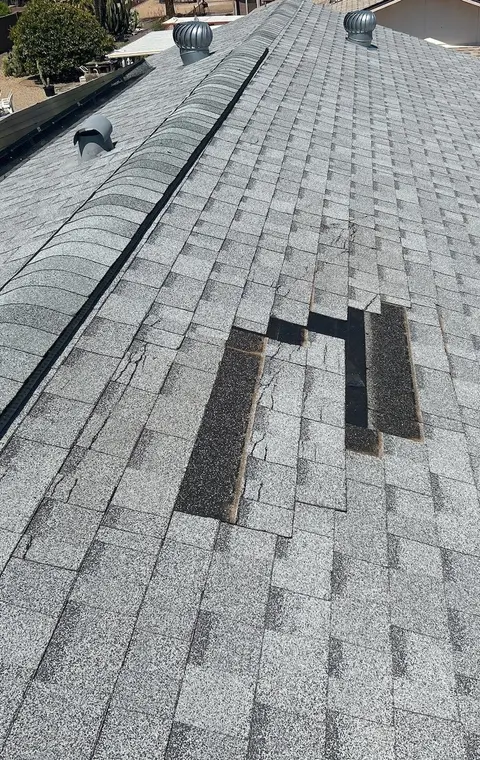
The short answer: monsoon storms drive rain sideways, forcing water up under tiles, past flashing, and into openings that gentle winter rain never tests. That is why a roof can stay dry all winter and leak in July. Here is how wind-driven rain actually moves, and what it finds.
Every year around this time, our phone starts ringing with the same story. The roof was fine all winter. It rained a few times in January and February and not a drop got inside. Then the first real monsoon storm of the summer rolls through, and by the next morning there is a brown ring on the living room ceiling. Homeowners are confused, and honestly, a little frustrated. If the roof handled winter rain, why did July break it?
The answer is that monsoon rain and winter rain are two completely different things, and Phoenix roofs are tested in ways a gentle winter shower never reveals. Wind-driven rain is the culprit, and once you understand how it moves, the leak makes a lot more sense.
Winter Rain Falls. Monsoon Rain Attacks.
A typical Phoenix winter storm is slow and steady. The rain comes almost straight down, the wind is mild, and the water lands on your roof and runs off exactly the way the roof was designed to shed it. Tiles overlap like shingles on a fish, water flows down the surface, into the valleys, off the eaves, and into the gutters. Everything works because gravity is doing the job the roof was built around.
Monsoon storms do not play by those rules. A strong Phoenix thunderstorm can dump a large volume of rain in twenty or thirty minutes, and it arrives sideways. Microburst and outflow winds ahead of a storm can gust past 60 miles per hour, and they push rain at a low, flat angle instead of straight down. That changes everything about how water behaves on your roof.
When rain is driven horizontally, it does not just run down the surface. It gets forced under the leading edge of tiles, up and beneath the overlaps, sideways into flashing joints, and into any gap that a vertical rain would have flowed right past. Water starts moving uphill. Gravity is no longer the only force in play, and the parts of your roof that never see moisture in a normal rain suddenly get soaked.
That is why a roof can pass every winter with a clean record and still fail on the first serious monsoon night.
What Wind-Driven Rain Actually Does to a Tile Roof
Most Phoenix homes wear concrete or clay tile, and tile roofs have a specific weakness that monsoon rain finds every time.
Here is the part that surprises people: the tiles are not what keeps water out of your house. The tiles are a sunshade and a wind shield. The real waterproof barrier is the underlayment underneath them, the membrane layer fastened to the roof deck. In a normal rain, very little water ever reaches that layer. In a wind-driven monsoon downpour, water gets forced under the tiles in volume and the underlayment has to do all the work.
On a healthy roof, it does. On an older roof, it does not. And this is where Phoenix has a problem that most of the country does not. Our extreme heat bakes underlayment brittle years before the tiles wear out. Standard 30-pound felt, which sits under a huge number of homes built in the 1990s and early 2000s across places like Sun City, Surprise, and the older Valley tracts, typically lasts only 15 to 20 years in our climate before it dries out and cracks. The clay or concrete tiles above it can last 50 years or more, so the roof looks perfect from the street while the layer that actually matters has quietly failed.
Put those two facts together and monsoon season becomes the moment of truth. Wind-driven rain pushes water past the tiles, the aged underlayment cannot hold it back, and it finds the deck, the insulation, and eventually your ceiling. We wrote a full breakdown of why tile roofs leak even when the tiles look fine, because this is the single most common monsoon leak we get called out for.
Shingle and Foam Roofs Get Tested Too
Tile is not the only roof type that struggles with wind-driven rain.
On asphalt shingle roofs, the danger points are the edges and the seams. Horizontal wind can lift the tabs of aging or poorly sealed shingles just enough for water to blow underneath, and once it is under the shingle it runs toward the nail line. Flashing around chimneys, skylights, and wall transitions takes a beating too, because that is exactly where sideways rain concentrates. Shingles that have spent a decade cooking in Phoenix sun lose the flexibility and the sealant grip that would normally keep them locked down, which is why sun damage and wind damage so often show up together. If a storm has already loosened or torn shingles, our storm damage repair crew can assess how far the water traveled before it stopped.
Flat foam roofs on modern and mid-century Valley homes face a different version of the same test. Foam sheds water by slope and coating, and a wind-driven storm can drive rain into any spot where the coating has thinned, cracked, or pulled away at a parapet or penetration. Add the ponding that happens when debris clogs a scupper or drain during a storm, and water sits on weak spots far longer than the system was built to handle.
Your Roof Is Already Weakened Before the Storm Arrives
Here is the piece a generic weather article will never tell you: Phoenix roofs walk into monsoon season pre-damaged by heat.
On a July afternoon, the surface of a tile roof can reach 150 to 180 degrees. Shingle surfaces and foam coatings get punishing exposure too. That heat is not a one-time event. Your roof cycles from a warm dawn to a scorching mid-afternoon and back down every single day, expanding and contracting hundreds of times a year. Sealants harden, flashing joints loosen, underlayment grows brittle, and shingle adhesive gives up its grip.
So when the first outflow winds and sideways rain hit in June or July, they are not testing a fresh roof. They are testing a roof that has been slowly stressed and dried out by months of extreme sun. The heat opens the gaps, and the monsoon finds them. That combination is specific to the desert Southwest, and it is why roofs here fail in patterns that would puzzle a contractor from a milder climate.
Where the Water Gets In
When we track down a monsoon leak, the entry point is almost always one of a handful of usual suspects:
- Valleys, where two roof planes meet and wind-driven water concentrates and moves fast
- Flashing at walls, chimneys, and skylights, where sideways rain is aimed straight at the seam
- Roof penetrations for vents, pipes, and conduit, where old rubber boots have cracked in the sun
- The eaves and fascia line, where wind can drive rain up and under the starter course
- Ridges and hips, where displaced or cracked tiles expose the underlayment to direct spray
Notice that most of these are not the broad, open field of the roof. They are the transitions and edges, the exact places horizontal rain targets and vertical rain ignores. A roof can have a perfectly sound main surface and still leak badly because one flashing joint or one cracked vent boot let the storm in.
What to Do After a Monsoon Storm
If you get through a storm and everything looks dry, that is good news, but it is not a guarantee. Water can travel a long way along a rafter or a deck seam before it shows up as a stain, sometimes days later. A little attention after each significant storm goes a long way.
From the ground, look for tiles that have slipped out of line, shingle tabs that are lifted or missing, debris piled in valleys, and any granules or broken tile pieces washed into the gutters or onto the patio. Inside, check upper-story ceilings and closets for fresh discoloration, and take a look in the attic with a flashlight for damp insulation or dark streaks on the underside of the deck. If you find anything, photograph it before you touch it, since clear documentation helps if the damage turns into an insurance conversation later.
Our Phoenix monsoon roof checklist walks through the whole routine, both the before-season prep and the after-storm check, in more detail. And if you do find a problem, catching it early is the difference between a minor roof repair and a torn-out ceiling, wet insulation, and a deck that has to be rebuilt.
The other thing worth doing, especially before the heart of the season, is getting eyes on the parts you cannot see from the ground. A professional roof inspection can catch a brittle vent boot, a lifted flashing edge, or an underlayment that is on its last year, while the fix is still small and the sky is still clear.
Frequently Asked Questions
Why does my roof only leak during monsoon storms and never in winter?
Because winter rain falls gently and straight down, so your roof sheds it exactly as designed. Monsoon rain arrives in high volume and is driven sideways by strong winds, which forces water under tiles, into flashing seams, and past edges that vertical rain never reaches. A roof with an aging underlayment or a worn flashing joint can shed winter rain all season and still fail the first time it faces a wind-driven downpour.
My tiles look perfect but my ceiling is stained. How is that possible?
The tiles are not your waterproof layer. The underlayment beneath them is, and in Phoenix that underlayment often wears out decades before the tiles do because of our heat. When wind-driven rain pushes water under the tiles and the underlayment has gone brittle, the water reaches the deck and your ceiling while the tiles above still look flawless.
Should I get on my roof to check for damage after a storm?
We do not recommend it. Wet tile and shingle are slick, and walking on tile can crack it and create the next leak. Do your inspection from the ground and from inside the attic, and leave the on-roof assessment to someone with the right footwear, harness, and experience.
How soon after a monsoon storm should I get a leak looked at?
Sooner is always cheaper. Water that gets in during a storm keeps doing damage to the deck, framing, and insulation long after the sky clears, and mold can start within a couple of days. If you see any interior staining or find damage from the ground, it is worth having it checked promptly rather than waiting for the next storm to make it worse.
Does monsoon damage get covered by homeowners insurance?
It depends on your policy and the cause, and we cannot speak for your carrier. What helps in any claim is documentation: dated photos of the damage, a record of when the storm hit, and a professional assessment of what failed. We can provide that assessment and the photos to support your conversation with your insurer.
Get Ahead of the Next Storm
Monsoon season runs into September, which means there is still plenty of weather ahead. The roofs that come through it dry are almost always the ones that got a look before the storms, not after. If your roof is more than 15 years old, if you have seen any staining, or if you just want the peace of mind of knowing the edges and flashing are sound, we are glad to take a look and give you an honest picture of where things stand. Call Pinnacle Roofing at (623) 792-5497 to schedule a free inspection.