
Commercial · foam roofing
Commercial Foam Roofing in Phoenix
Commercial foam roofing is the workhorse flat-roof system in Phoenix, and for good reason. Spray polyurethane foam (SPF) goes down as one continuous, fully adhered membrane with insulation built in, so there are no seams to fail at the laps the way single-ply systems do, and no thermal bridging at fasteners. Pinnacle Roofing installs, repairs, recoats, and replaces commercial foam roofs across the Valley: warehouses, offices, retail centers, schools, and multifamily buildings. Since 1999, AZ ROC #161685, licensed, bonded, and insured.
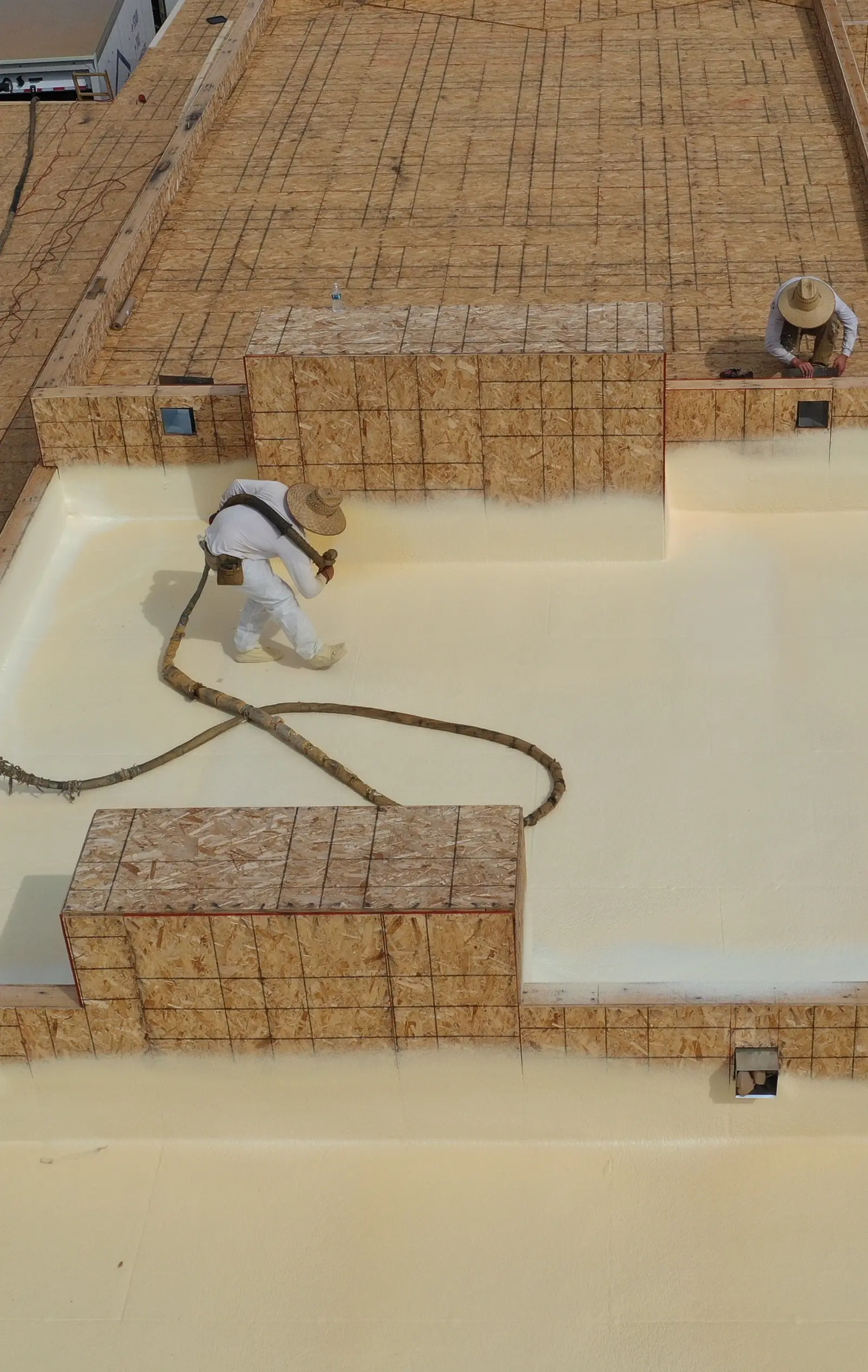
Foam Services for Flat and Low-Slope Roofs
Foam is a system you manage over decades, not a product you buy once. A properly maintained SPF roof runs 25 to 30 or more years, with a recoat every 5 to 10 years doing most of the work of keeping it there. We cover the full cycle:
- Foam roof installation: new SPF systems for new builds and retrofits
- Roof recoating: silicone or elastomeric topcoats that reset the UV clock
- Foam roof repair: blisters, cracks, ponding, and penetration leaks
- Foam roof replacement: full removal and new system when it's time
Foam Versus TPO and Other Single-Ply Systems
Property managers ask us this constantly, so here's the honest version. TPO is a fine system, and on some buildings it's the right call. But single-ply membranes fail first at their weak points: heat-welded seams, fastener rows, and the boots around HVAC penetrations. Phoenix roofs are crowded with rooftop units, and every curb and pipe is a hole in the membrane. Foam is sprayed as one monolithic layer that self-flashes around every penetration, parapet, and scupper, and it adds R-value the membrane doesn't. Repairs are simpler too: foam can be patched and recoated indefinitely, while an aging single-ply eventually needs full replacement. Over a 30-year horizon in this climate, foam usually wins on total cost.
What Foam Does for Operating Costs
Closed-cell SPF adds roughly R-6.5 per inch of continuous insulation across the entire deck, and the reflective topcoat bounces most of the solar load before it ever reaches the foam. On warehouses, offices, and retail buildings, that combination shows up as a measurable drop in summer HVAC runtime. For owners tracking energy line items across a portfolio, the roof is one of the few places you can buy efficiency and waterproofing in the same purchase.
Managed for Property Managers
We build maintenance programs around commercial foam roofs: scheduled inspections, recoat planning tied to your reserve budget, and photo reports after every visit so you always know the roof's condition without climbing a ladder. When repairs are needed, we schedule around your tenants and keep overspray protection tight around HVAC equipment, parking, and neighboring property.
How it works
Foam Roofing: what to expect
- Step 1
Roof evaluation
We inspect the existing roof or new deck, check drainage and penetrations, and document condition with photos.
- Step 2
System recommendation
Install, repair, recoat, or replace: you get a written recommendation with pricing and expected service life for each viable path.
- Step 3
Scheduled work
Work is planned around your operations, with masking and overspray protection around rooftop equipment and surroundings.
- Step 4
Closeout and maintenance plan
Final walkthrough, warranty registration, and a recoat schedule you can build into your capital budget.
FAQ
Foam Roofing FAQs
How long does a commercial foam roof last in Arizona?
With proper installation and periodic recoating, 25 to 30 or more years. The foam itself doesn't wear out; the protective topcoat does, and recoating on a 5 to 10 year cycle keeps the system going indefinitely.
Is foam better than TPO for a Phoenix flat roof?
Usually, yes, in this climate. Single-ply systems fail first at seams and penetration boots, and Phoenix roofs are full of penetrations. Foam is seamless, self-flashing, and adds insulation. There are buildings where TPO makes sense, and we'll tell you if yours is one.
Can foam be installed over an existing commercial roof?
Often, yes. SPF can be applied over prepared BUR, gravel, and some other substrates, which reduces tear-off cost, landfill waste, and disruption to the building below.
How much maintenance does a foam roof need?
An annual inspection, prompt attention to any mechanical damage from rooftop trades, and a recoat every 5 to 10 years. We run maintenance programs that handle all three with photo reports after every visit.
Does foam roofing really lower cooling bills?
Yes. Foam adds continuous closed-cell insulation across the whole deck with no thermal bridging, and the reflective coating cuts surface temperatures dramatically. On large flat roofs the reduction in summer HVAC load is measurable.
Related
Above the Standard
Free Foam Roofing Estimate
Tell us what the roof is doing and we will take a look. Licensed Arizona contractor, AZ ROC #161685, serving the Phoenix metro since 1999.