
Commercial · Roofing
Church Roofing Company in Phoenix
A church roofing company in Phoenix has to be comfortable with roofs most contractors rarely see: steep sanctuary pitches, long uninterrupted planes, steeples and cross gables, and then, usually attached to all of it, a flat-roofed wing of classrooms and offices. Pinnacle Roofing has worked on worship buildings across the Valley since 1999, and the combination we bring fits church architecture well: standing seam metal fabricated in-house for the steep, visible roofs, and spray foam for the flat sections. We also understand that the building is in use every week and the money came from the congregation. AZ ROC #161685, licensed, bonded, and insured.
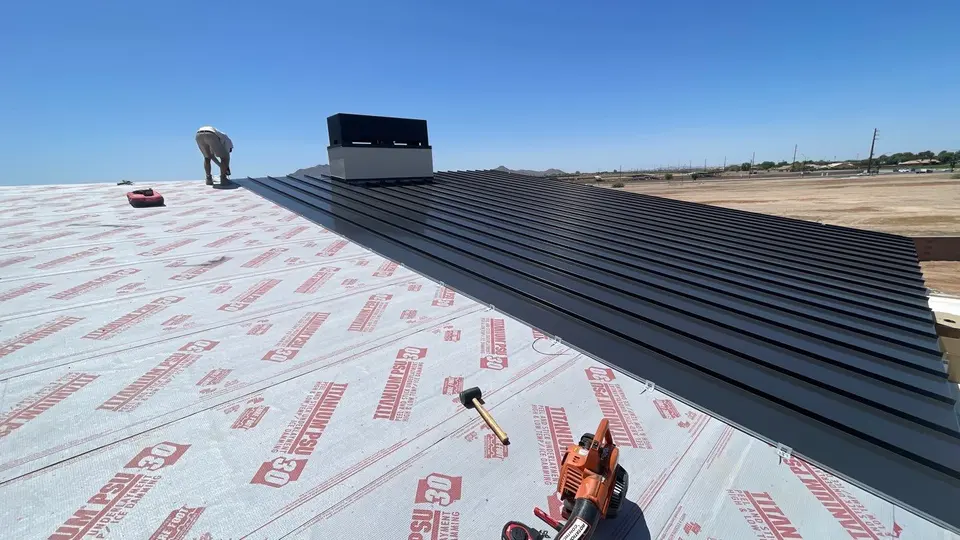
Steep Roofs, Steeples, and Standing Seam Metal
Sanctuary roofs are usually the most architecturally demanding part of a church: steep pitches, tall uninterrupted planes visible from every direction, and details like steeples, cross gables, and clerestory transitions that punish stock materials. Standing seam metal is a natural fit for these roofs, and it's where our in-house fabrication earns its keep. We form panels on our own shop and mobile brakes in continuous lengths cut to the actual roof, so long steep runs go down without unnecessary end laps, and we fabricate the custom flashings, transitions, and trim that steeple bases and gable intersections require rather than improvising them from catalog parts. The result is a roof that handles Phoenix sun and monsoon wind for decades and looks right from the street, which matters on a building the whole congregation identifies with.
Foam for the Flat Wings
Most Valley churches aren't one roof. Behind or beside the sanctuary there's typically a flat-roofed fellowship hall, classroom wing, or office block, often spanning large open rooms below. Spray foam is our standard recommendation for these sections: it goes down as one seamless layer that self-flashes around the HVAC units and penetrations that cluster on these roofs, it adds insulation over spaces that are expensive to cool for Sunday occupancy, and it's maintained by recoating on a schedule rather than replaced. Those large open spans matter structurally too: fellowship halls and sanctuaries often have long roof spans with no interior walls below, and foam's light weight makes it one of the few systems that can be added or renewed without a structural conversation. We handle both systems and the transitions between them, so the church deals with one contractor for the whole building, and one assessment covers everything from the steeple to the classroom wing.
- Standing seam metal for sanctuary roofs, fabricated in-house
- Spray foam on flat fellowship, classroom, and office wings
- Recoat schedules that keep existing foam roofs in service
- Repairs on tile and shingle where the existing roof should stay
Scheduled Around Your Services
A church is quiet all week and full on the weekend, which makes it one of the more schedulable buildings we work on, as long as the contractor respects the calendar. We plan noisy work for weekdays, have the roof secure and the site clean before weekend services, and coordinate around the midweek realities most congregations have: preschool programs, funerals that appear on short notice, weddings, and evening groups. Your office gets a schedule and a single point of contact, and when something on the church calendar changes, the work plan adjusts around it. Site presentation matters more on a church than on most commercial buildings, and we treat it that way: staging is kept compact and out of sight lines where possible, walkways and entries stay clear and safe for members who come by during the week, and there's no equipment or debris greeting the congregation on Sunday morning. If the building hosts a school or daycare, we fold their schedule and safety requirements into the plan the same way we do on any occupied campus.
Honest Recommendations for Congregation-Funded Budgets
Church roofing money usually comes from the congregation, sometimes from a capital campaign that took years, and boards and building committees answer for every dollar of it. We treat that with respect. Our assessments distinguish clearly between what the roof needs now, what can wait, and what's optional, and when a repair or a recoat honestly serves the building, we recommend it over replacement. Proposals are written so a building committee of volunteers can evaluate them, with photo documentation of the conditions driving each recommendation, and we're glad to walk the committee through it. Where the full project exceeds this year's budget, we'll break the scope into stages the committee can plan around: stop the active problems now, schedule the larger work for after the next campaign, and put the maintenance items on a calendar so nothing gets rediscovered as a crisis later. Work is backed by comprehensive warranties, and the closeout documentation gives the committee a record it can hand to its successors.
How it works
Church Roofing: what to expect
- Step 1
Building assessment
We inspect every roof section, from steeple to flat wing, and document conditions with photos your committee can review.
- Step 2
Written proposal
Options and recommendations in plain language, separating what the roof needs now from what can wait for a future budget.
- Step 3
Scheduled work
Noisy work runs on weekdays, the site is clean and secure before weekend services, and the plan flexes around your calendar.
- Step 4
Closeout and warranty
Final walkthrough, photo report for the building committee's records, and warranty registration.
FAQ
Church Roofing FAQs
Can you work on steep sanctuary roofs and steeples?
Yes. Steep, architectural roofs are where our standing seam metal work fits best. We fabricate panels and custom flashings in-house on shop and mobile brakes, which is what steeple bases, gable intersections, and long steep panel runs require to be done right.
Our church has a flat roof over the classrooms. What do you recommend?
Usually spray foam. It's seamless, it self-flashes around the HVAC penetrations that cluster on those wings, and it insulates large open rooms that are costly to cool. If the wing already has foam, a recoat on schedule is often all it needs.
Will roofing work interfere with our services?
No. We schedule noisy work on weekdays and have the roof secured and the site cleaned before weekend services. We also plan around midweek programs, funerals, and events on your calendar.
How do you work with a volunteer building committee?
With plain-language proposals and photo documentation of everything driving our recommendations. We separate urgent work from deferrable work so the committee can match the project to the budget, and we'll walk the committee through the proposal in person or by phone.
Related
Above the Standard
Free Church Roofing Estimate
Tell us what the roof is doing and we will take a look. Licensed Arizona contractor, AZ ROC #161685, serving the Phoenix metro since 1999.