
Commercial · Roofing
Warehouse & Industrial Roofing in Phoenix
A warehouse roofing company in Phoenix deals in acreage: low-slope decks measured in tens or hundreds of thousands of square feet, over operations that don't pause because a roofer showed up. Pinnacle Roofing has worked on warehouse and industrial roofs across the Valley since 1999, and the job at that scale is as much logistics as roofing: sectioning the work so inventory and equipment below stay protected, keeping dock doors and truck routes open, and handling the skylights and smoke vents that big-box roofs carry by the dozen. AZ ROC #161685, licensed, bonded, and insured.
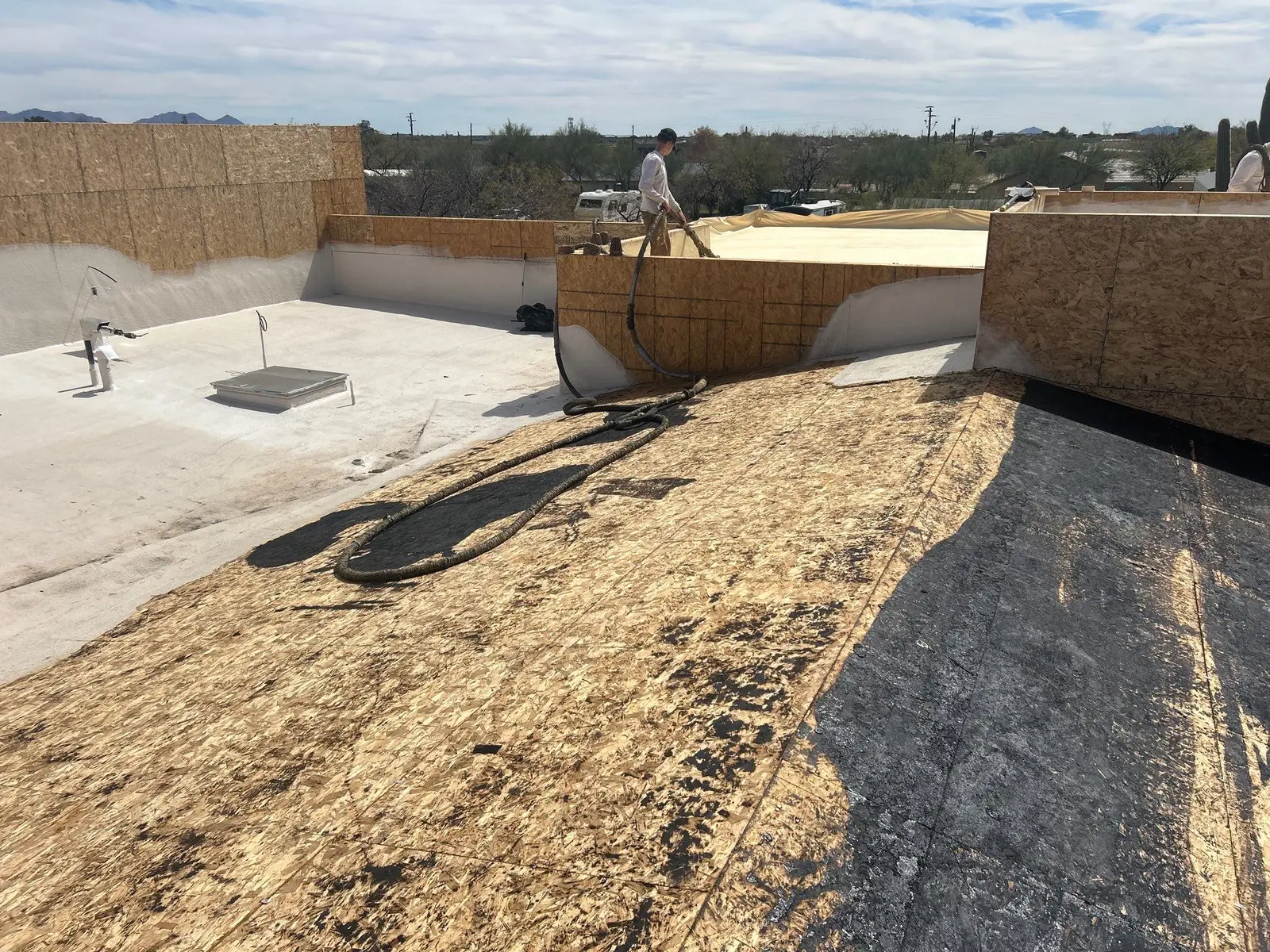
Big Decks Change the Math
On a large low-slope deck, every detail multiplies. A minor drainage flaw becomes hundreds of feet of ponding. A small per-square-foot difference in cooling performance becomes a real number on a building conditioning that much air, and on unconditioned warehouse space, roof insulation is often the main thing standing between the racking below and a 160-degree deck. Large roofs also fail incrementally rather than all at once, which means the right move is often sectional: repair or recoat the areas that need it now, schedule the rest, and spread the capital across budget years. Our assessments map the roof zone by zone with photo documentation, so you're making decisions about specific areas of a specific roof instead of averaging the whole thing into one number. Scale also changes who's in the conversation: on industrial buildings we're often working alongside a facilities manager, an owner's rep, and a corporate real estate team in another state, so our reports are written to travel. The person approving the budget can see the same zone map and photos the person on the roof saw.
Foam Versus Single-Ply, Answered Honestly
Warehouse owners get pitched TPO constantly, so here's our straight version. Single-ply systems are legitimate and on some buildings they're the right call, particularly where a roof is being specified to a national owner's standard or the deck conditions favor a mechanically fastened system. But single-ply fails first at its seams, fastener rows, and penetration boots, and it adds little insulation on its own. Foam goes down seamless, self-flashes around every skylight curb and vent, adds real R-value across the whole deck, and is maintained by recoating rather than replaced. On most Phoenix warehouse roofs we believe foam wins over a 30-year horizon, and where it doesn't, we'll say so to your face. What we won't do is pretend the question has one answer for every building.
- New foam systems over metal, wood, and concrete decks
- Recoating programs that maintain existing foam at maintenance cost
- Repairs to existing foam, built-up, and coated systems
- Sectional scopes that split large decks across budget years
Skylights, Smoke Vents, and the Holes in the Roof
Industrial roofs carry rows of skylights and code-required smoke vents, and each one is both a leak point and a fall hazard. Aged skylight domes go brittle under Phoenix UV and their curb flashings fail long before the roof field does; smoke vents have to remain operable, which rules out the seal-it-and-forget-it shortcuts some crews take. We inspect and reflash every curb as part of any warehouse roof scope, replace domes that are past their service life, flash smoke vents so they stay functional, and treat every opening as a fall-protection point for our crews while the work is on. Getting these details right is most of what separates a dry warehouse from one with a bucket brigade every monsoon. On a typical industrial scope that means:
- Every skylight and smoke vent curb inspected and reflashed, not painted over
- Brittle, UV-aged domes replaced before they become entry points for water or people
- Smoke vents flashed to stay operable, as the fire code requires
- Openings barricaded or covered as fall-protection points during the work
Sectioned Work That Keeps the Operation Moving
A working warehouse can't stage its inventory around a roofer's convenience. We plan large-roof projects in sections agreed with your operations team: which bays are being worked over on which days, what below needs covering or moving, and which dock doors and drive lanes stay clear at all times. Receiving schedules, shift patterns, and food-grade or clean-area requirements below the deck all shape the sequence. Coating and foam odors get managed at the air intakes, roof access is coordinated so it never blocks a dock, and the day's work is closed watertight every day, because monsoon storms don't check the project schedule. Where the operation below is especially sensitive, sections can run on weekends or across shift gaps, and tear-off over critical racking gets interior protection before the first cut is made. The daily rhythm is simple and non-negotiable: open only what can be closed by end of day, close it, then walk the section before the crew leaves.
How it works
Warehouse Roofing: what to expect
- Step 1
Deck assessment with photo documentation
We map the roof zone by zone: field condition, drainage, every skylight and vent curb, and every penetration, all photographed.
- Step 2
Written proposal
An itemized scope with options, including sectional phasing where it lets you spread capital across budget years.
- Step 3
Sectioned, scheduled work
Work proceeds bay by bay on a sequence agreed with your operations team, with docks, drive lanes, and intakes managed daily.
- Step 4
Closeout and warranty
Final walkthrough, zone-by-zone photo report for your capital plan, and warranty registration.
FAQ
Warehouse Roofing FAQs
Can you roof our warehouse while it keeps operating?
Yes, that's the standard plan. We section the work with your operations team, keep agreed dock doors and drive lanes clear, cover or coordinate anything sensitive below the active section, and close each day's work watertight.
Is foam or TPO better for a Phoenix warehouse?
Usually foam in this climate: it's seamless, self-flashes around skylights and vents, and adds insulation across the whole deck. But it's not one answer for every building, and where a single-ply system genuinely fits your deck or your owner's spec, we'll tell you that plainly.
Do we have to do the whole roof at once?
Rarely. Large decks fail by zone, not all at once. We map which areas need work now, which can be recoated or repaired, and which can wait, then build a sectional plan that spreads the spend across budget years.
What do you do about our skylights and smoke vents?
Every curb gets inspected and reflashed as part of the scope. Brittle domes past their service life get replaced, and smoke vents are flashed so they stay operable, since sealing them shut isn't an option under code.
Related
Above the Standard
Free Warehouse Roofing Estimate
Tell us what the roof is doing and we will take a look. Licensed Arizona contractor, AZ ROC #161685, serving the Phoenix metro since 1999.