
COMMERCIAL ROOFING
New Commercial Roofing in Phoenix: Choosing the System
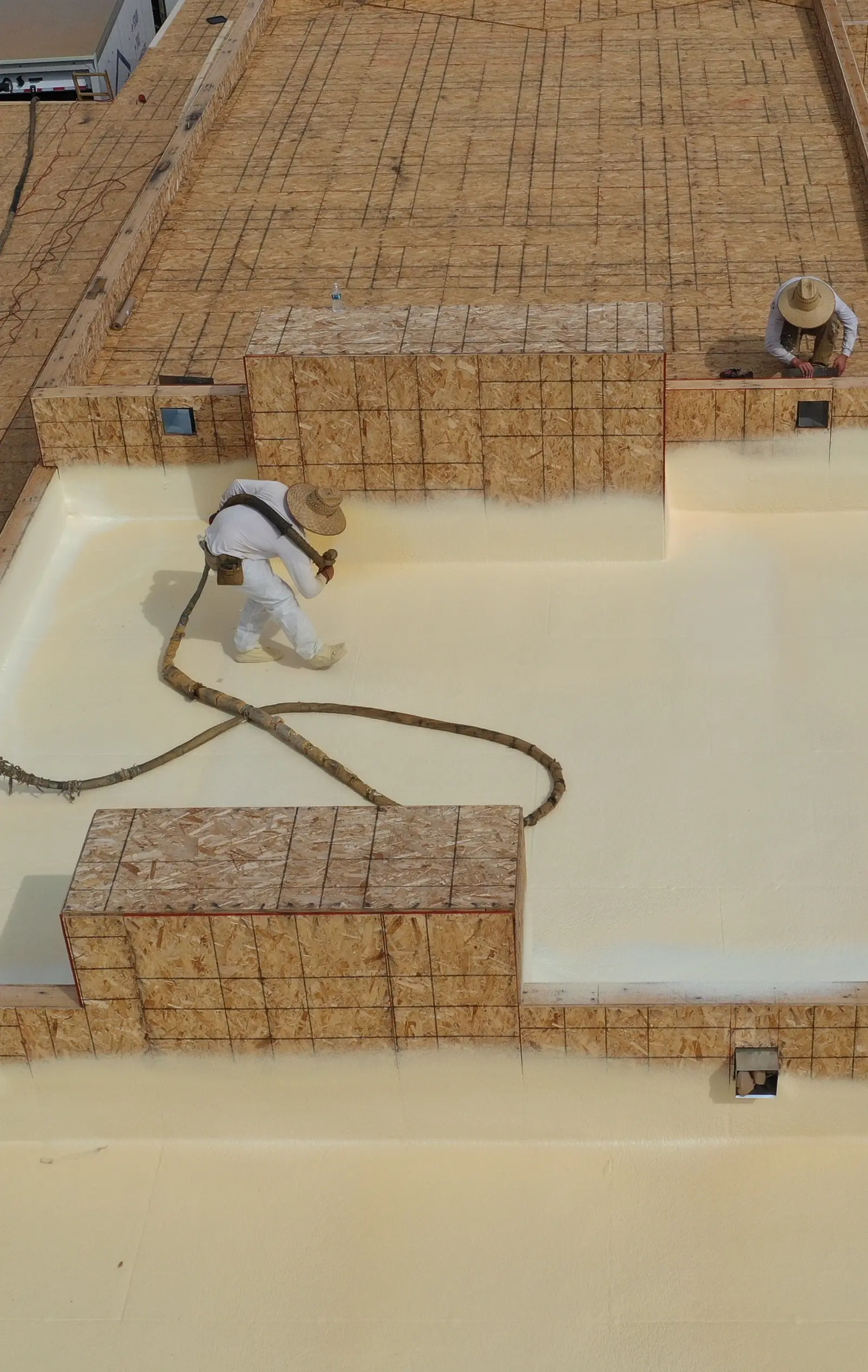
The short answer: on a new Phoenix commercial building the choice usually comes down to sprayed foam, single-ply membrane, or standing seam, and it is decided by roof geometry, what is going on the roof, and how long the owner intends to hold the building. Get drainage and equipment layout settled before anyone specifies a membrane, because those two decide more about the roof’s life than the material does.
The Three Systems That Cover Most Valley Buildings
Sprayed polyurethane foam. Seamless, insulating, and the only system that can be tapered on site to fix drainage. It suits cut-up roofs with a lot of penetrations and buildings where the owner will actually maintain it, since the coating has to be renewed roughly every 5 to 10 years. On the right building it is the cheapest roof per year of service. On a building that will be sold in five years to an owner who does not know it needs recoating, it is a liability.
Single-ply membrane, meaning TPO or PVC. The national commercial default and a strong choice on large, simple roofs. Sheets are mechanically fastened or adhered, so there are seams, and seams are the thing to get right. It does not insulate on its own, so insulation is a separate layer in the assembly, and it will not correct slope. Where foam wins on complexity, single-ply wins on scale and on predictable installed quality, since the material is made in a factory rather than on your roof.
Standing seam metal. For pitched commercial roofs and for buildings where appearance carries weight, which in practice means churches, schools, retail frontages, and anything with a public face. Longest service life of the three and the least maintenance. It is not a low-slope answer.
There is no default. Anyone who recommends a system before looking at the roof plan and the mechanical drawings is guessing.
Decide Drainage Before You Decide Material
This is the part that gets rushed on new construction and causes the most trouble later.
Phoenix commercial roofs are usually dead flat or close to it, and a roof that does not drain fails early no matter what is on it. Water that sits for a week works on seams, degrades coatings, adds load, and voids more warranties than most owners realize. It is also the one problem that is expensive to fix after the fact and nearly free to avoid at design.
So settle it early: where the drains and scuppers are, whether there is enough of them, whether the deck actually slopes toward them, and whether tapered insulation or foam is doing the slope work. Overflow provision matters here too, because our rain arrives all at once during monsoon rather than gradually.
If drainage is compromised by the structure, foam’s ability to be built up in low spots becomes a genuine advantage rather than a marketing line.
Plan for What Goes on the Roof
Phoenix commercial buildings carry their mechanical equipment on the roof. That has consequences the roofing system has to absorb.
Every unit is a curb, and every curb is a flashing detail, which is where low-slope roofs actually leak. Every unit also means service technicians walking the same path a few times a year, so walk pads on those routes are not optional on a foam roof and are a good idea on any of them. Condensate lines need to discharge somewhere that was designed for water, not wherever the pipe happened to reach.
Get the mechanical layout and the roof plan in front of the same people before the roof is specified. Equipment added after the fact means cutting into a new roof, and it means a conversation about whose warranty covers what.
Scheduling Around Weather
New construction schedules and monsoon season do not naturally cooperate.
Foam cannot be applied in wind or on a wet substrate, and it needs a dry cure window. Coatings have application temperature ranges that a Phoenix roof deck exceeds by mid-morning in summer, so that work happens early in the day. Single-ply is less weather sensitive but its seams still are not indifferent to conditions.
The practical answer is that between roughly mid-June and September, roofing on a new building needs float in the schedule and a crew willing to work around forecasts. A GC who treats roofing as a fixed-duration task in July will get a compressed job, and compressed roofing is where quality goes.
Warranties Are Not All the Same Thing
Commercial roofing warranties come in kinds that get conflated in conversation, and the difference matters on a building you are financing.
A material warranty covers the product against defects. A manufacturer’s system warranty covers the assembly when it is installed by a certified contractor to the manufacturer’s details. An NDL, or no dollar limit, warranty is the strongest form, covering labor and material to repair covered leaks without a cap. And separate from all of those is the installing contractor’s own workmanship coverage.
The questions worth asking are which one is being quoted, what the term is, what voids it, and whether maintenance is a condition of keeping it in force. That last one catches owners regularly, because most system warranties require documented periodic inspection and many owners never learn that until they make a claim.
Matching the System to the Building Type
Different buildings push toward different answers, and we have written more on several of these.
Warehouses and distribution buildings have large simple roofs where single-ply or foam both work, and the deciding factors are usually insulation targets and how much rooftop equipment there is. See warehouse roofing.
Retail buildings have a public face, so the pitched elements often want metal even when the flat area behind gets a membrane. See retail roofing.
Churches and schools have long ownership horizons and constrained maintenance budgets, which argues for systems that ask less over time, and school work also has to fit an academic calendar. See church roofing and school roofing.
Multi-building residential projects and HOA properties bring phasing and assessment planning into the decision. See HOA roofing.
Frequently Asked Questions
What is the best commercial roofing system for Phoenix?
There is no single answer, and the honest short version is foam for cut-up low-slope roofs with an owner who will maintain them, single-ply for large simple roofs, metal for pitched and visible work. Roof geometry, rooftop equipment, and the ownership horizon decide it.
How long does a new commercial roof last here?
Foam effectively indefinitely with recoats every 5 to 10 years, single-ply generally 20 to 30 depending on the membrane and thickness, standing seam considerably longer. Our UV is at the hard end for every one of them.
Does a new commercial roof need to meet cool roof requirements?
Reflectivity requirements come up on commercial work in this climate and vary by jurisdiction and by which code edition applies. It is worth confirming for your specific project early, since it constrains color and product selection.
Can the roof be installed in phases?
On a large building, often yes, and it is common on occupied re-roofs. On new construction it usually follows the deck and the mechanical schedule rather than being phased for its own sake.
Who is responsible if a rooftop unit leaks later?
That depends on who penetrated the roof and whether the detail was made to the manufacturer’s specification. It is a good reason to have the roofer flash the curbs rather than have another trade cut into new work.
Talk It Through Before It Is Specified
The cheapest time to get a commercial roof right is before anything is on the deck. We are glad to look at a roof plan and mechanical drawings and tell you what we would put on the building and why.
Call Pinnacle Roofing at (623) 792-5497, or read more about our commercial roofing work.