
MAINTENANCE
Roof Repairs in Phoenix: What Homeowners Need to Know
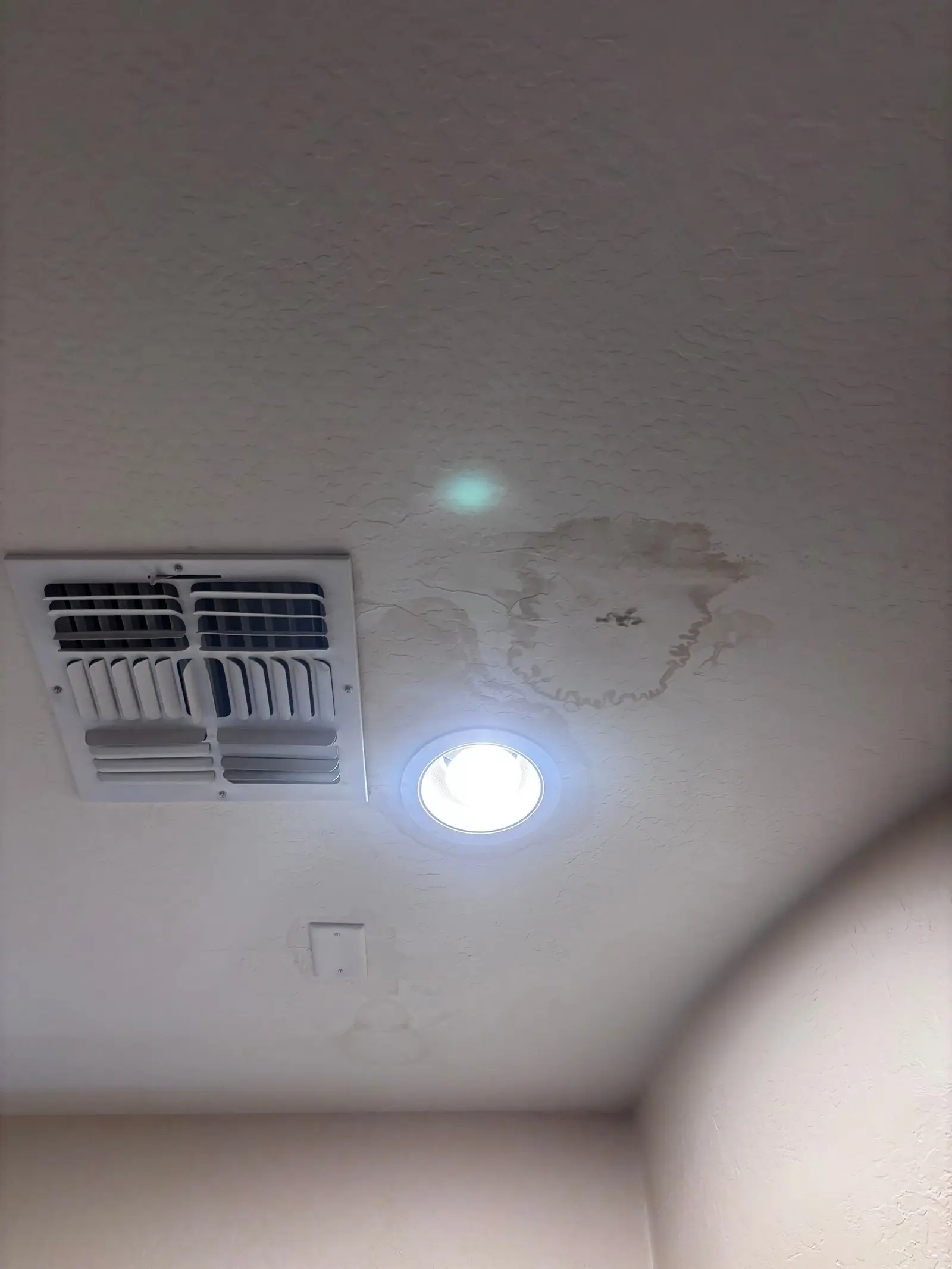
The short answer: most Phoenix roof problems are repairs, not replacements. Leaks here usually start at a penetration, a flashing, a valley, or a broken tile rather than in the field of the roof, and those are all fixable. The question to settle before spending anything is whether the problem is in one place or everywhere.
The Leak Is Almost Never Where the Stain Is
This is the first thing worth understanding, because it explains why a repair sometimes takes a second visit and why a confident diagnosis from the driveway is worth nothing.
Water gets in at one point and then travels. It runs along the top of underlayment, down a rafter, across the top of a ceiling, and comes through the drywall at whatever low point it finds. On a tile roof it can move a long way before it ever reaches the deck. A stain in the middle of a bedroom ceiling might come from a flashing detail fifteen feet away at a wall.
So finding the leak is genuinely the work. Anyone who arrives, looks at the stain, and quotes a roof from that has skipped the part you are paying for.
What Actually Breaks on Valley Roofs
The pattern here is different from wetter parts of the country, and it repeats.
Broken tiles from foot traffic. This is the single most common cause of tile roof leaks we find, and it is almost never the roofer’s doing. Concrete tile is strong in the middle and fragile at the edges and it does not tolerate being walked on carelessly. Over the years an HVAC tech, a satellite installer, a painter, a solar crew, and a pest control company all get on that roof. Each one cracks a tile or two. Nobody mentions it. Five years later there is a leak. If you have had trades on your roof, that is the first place to look.
Flashing at walls, chimneys, and skylights. Where the roof meets something vertical is where roofs leak, everywhere on earth. Our version fails from UV on the sealant and from thermal movement working the metal.
Failed sealant at penetrations. Vents, pipes, and equipment curbs. Sealant is a maintenance item here on a shorter cycle than most people expect, because it bakes.
Valleys packed with debris. Dust, gravel, and palm debris dam up a valley, water backs up over the flashing, and it goes under the tile. This is a cleaning problem masquerading as a roofing problem.
Wind-driven rain during monsoon. Rain moving sideways gets under tile at eaves and up under panel end laps in ways that vertical rain never does. This is why a roof can be dry for eight months and leak twice in August. We wrote about the mechanism in our post on what monsoon wind-driven rain does to Phoenix roofs.
That last pattern is worth naming, because it is the source of a lot of frustration. A roof that only leaks in specific conditions is not a mystery and it is not imaginary. It means the failure point only gets wet when water arrives at a particular angle or volume.
What a Good Repair Looks Like
The difference between a repair that holds for years and one that fails next monsoon is usually visible.
A good repair replaces the failed component. Broken tiles get swapped for matching tiles. Failed flashing gets removed and new flashing gets installed and correctly lapped so water runs over it, not behind it. Deteriorated underlayment in the affected area gets cut out and patched with proper material. The work goes back to the way the roof was supposed to be built.
A bad repair covers the failed component. The signature of it in the Valley is roofing cement, smeared over everything in a black mound. Mastic on a Phoenix roof gets a season, maybe two, before our sun turns it hard and it cracks, and now the water goes in the same place with a lump of tar over it hiding the evidence. If somebody has been up on your roof and left black smears everywhere, that is not a repair history, that is a list of places to look.
The other tell is whether anybody explained what failed. A repair should come with a cause, not just an outcome.
Repair or Replace
Roofing companies get accused of pushing replacements, sometimes fairly. Here is the honest line.
Repair is right when the problem is local and the rest of the system has life left. A few broken tiles, one bad flashing, a valley that needs work, storm damage to one slope. Age by itself is not a reason to skip a repair that will hold.
Replacement, or more often the middle option of replacing the underlayment while reusing the tile, is right when the failure is general. Underlayment that is brittle across the whole roof, shingles that shatter rather than flex, a deck that has been wet over a wide area. In those cases each repair just relocates the next leak.
The test is one place versus everywhere, and it is answerable in an afternoon on the roof. Our guide on whether you need a new roof works through it by system, and for tile specifically there is a longer version in our post on repair, restore, or replace.
About Storm Season Door-Knockers
After a big monsoon cell moves through, crews go door to door in the affected neighborhoods. Some are legitimate. Many are not, and a few are from out of state and will not be here next year to honor anything.
The safe pattern is simple. Do not authorize work from somebody who showed up uninvited. Get an opinion from a company you contacted yourself. Verify any license number through the AZ ROC before signing, which takes about a minute and is worth doing every time. And be skeptical of anyone who is on your roof within minutes of meeting you and comes down with photos of damage you cannot verify. Our guide on how to choose a roofing contractor covers what to check.
If you do have storm damage and an insurance claim is in play, documenting it properly matters. We wrote a full post on how to document roof damage for insurance.
Frequently Asked Questions
How much does a roof repair cost in Phoenix?
It depends heavily on what failed and how hard it is to reach. Small tile repairs and single flashing details sit at the low end, and work that involves opening up an area, replacing underlayment, and repairing deck sits well above that. The honest answer is that a repair is a small fraction of a replacement, which is why it is worth establishing whether a repair will hold before pricing anything bigger.
Can you repair just one section of a roof?
Yes, and it is usually the right thing to do. Sectional work is normal, particularly on a large roof where one slope has a problem and the rest is sound.
Will a repair match my existing tile?
Usually close, and sometimes not exactly. Concrete tile fades over decades, so new tile of the same profile and color will look newer for a while. On a discontinued profile we can often source salvage. If exact match matters to you, say so up front.
My roof only leaks in heavy storms. Is that still worth fixing?
Yes, and it is a useful clue rather than a small problem. A roof that leaks only in wind-driven rain has a specific failure point that only gets wet under those conditions. It is not going to improve on its own, and monsoon rain is exactly when you do not want it opening up further.
How soon do I need to deal with a leak?
Sooner is meaningfully cheaper. Water in a roof assembly does not sit still, and the cost curve runs from a repair, to underlayment and deck work, to framing and interior repairs. Catching it while it is still a roofing problem is the whole game.
Get It Looked At
We will find where the water is actually getting in, tell you what failed and why, and give you a written price for fixing that rather than a price for a new roof you may not need.
Call Pinnacle Roofing at (623) 792-5497 for a free inspection, or read more about roof repair.